Unit 3 (Macroeconomics)
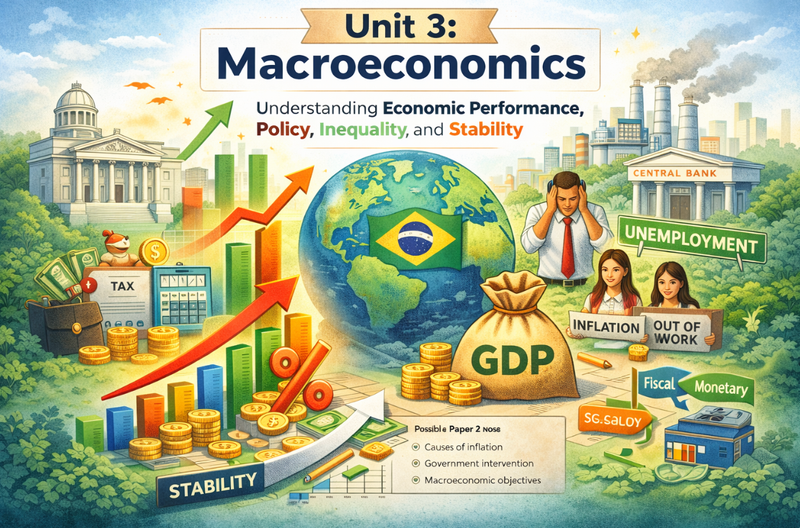
Introduction: Unit 3
Unit 3 focuses on how entire economies perform and the major challenges they face, including economic growth, inflation, unemployment, and inequality. It also examines how governments use fiscal, monetary, and supply-side policies to promote stability and improve economic well-being. The following real-world case studies, developed by Mr Weldon's IB Economics students, help connect these macroeconomic concepts to real policy decisions and outcomes.
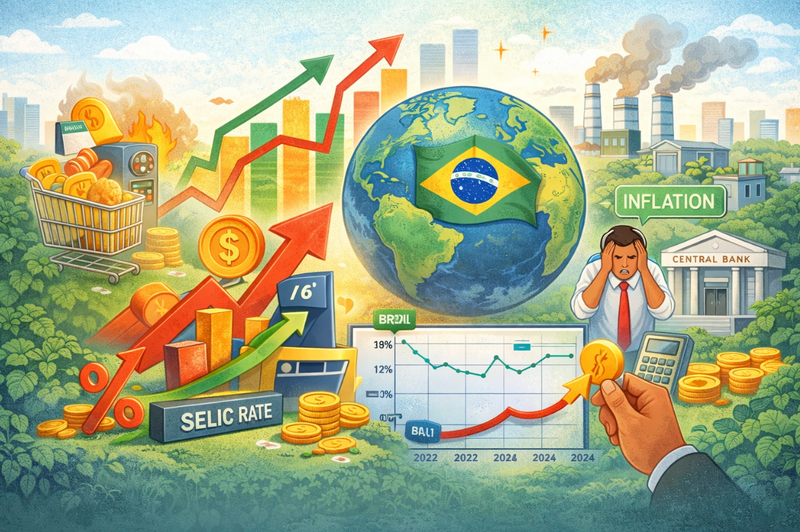
Unit 3.3 (Macroeconomic objectives: Inflation)
This subtopic explores the causes and consequences of inflation and the role of monetary policy in maintaining price stability within an economy. It examines how central banks use interest rates to influence aggregate demand and control inflation. The following case study analyzes Brazil’s use of contractionary monetary policy between 2021 and 2024 as a real-world example of how increasing interest rates can reduce inflation and restore macroeconomic stability.

Unit 3.4 (Economics of inequality and poverty)
This subtopic explores how income and wealth are distributed within an economy and why inequality occurs. It examines the economic and social impacts of unequal distribution, as well as the role of government policies in promoting greater equity and reducing poverty. The following case study analyzes Brazil’s Bolsa Família program as a real-world example of a redistribution policy aimed at improving income distribution and supporting low-income households.